Get to know the members of ORSSA: Gavin le Roux

In this edition of Get to Know the Members of ORSSA, we feature Gavin le Roux, who serves as Head of External Liaison on the Executive Committee and is currently the Chairperson of the Local Organising Committee (LOC) for the upcoming Stellenbosch ORSSA Conference.
In this short interview, we learn more about Gavin and his interests in OR.
"I would strongly encourage you to get involved in communities like ORSSA early. Attend the conference, join a SIG and volunteer where you can. The networks you build as a student and in your early working career often stay with you for a lifetime."

Gavin, what is your academic and professional background?
"My academic journey began at Stellenbosch University (SU), where I completed a BSc in Operations Research and Applied Mathematics in 2014, followed by a BComHons in 2015 and an MCom in 2017, both in Operations Research. My Honours thesis was a case study for PEP Stores where multi-objective algorithms were developed to optimise stock keeping unit assignments in their largest distribution centre, while my Master’s research focused on metaheuristics for complex job scheduling problems. The results of my Honours work were well received by PEP’s board of directors and were presented at the 44th Annual Conference of the Operations Research Society of South Africa (ORSSA) in 2015, my first taste of the society that I would later serve on the Executive Committee.
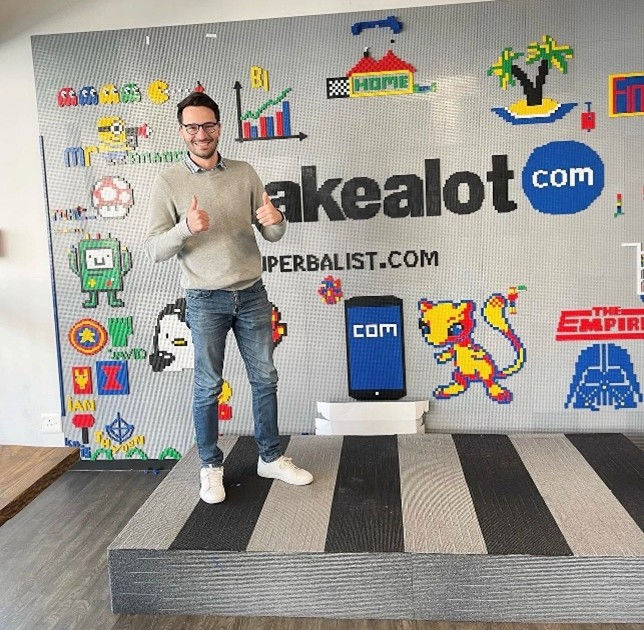
On the professional side, I spent four years as a Supply Chain Optimisation Analyst at the Takealot Group, where I applied mathematical modelling, data science and optimisation techniques to real-world logistics and e-commerce challenges. Projects ranged from vehicle routing and driver scheduling to box size optimisation and courier allocation modelling. This work gave me a deep appreciation for the practical impact that Operations Research (OR) can have at scale.
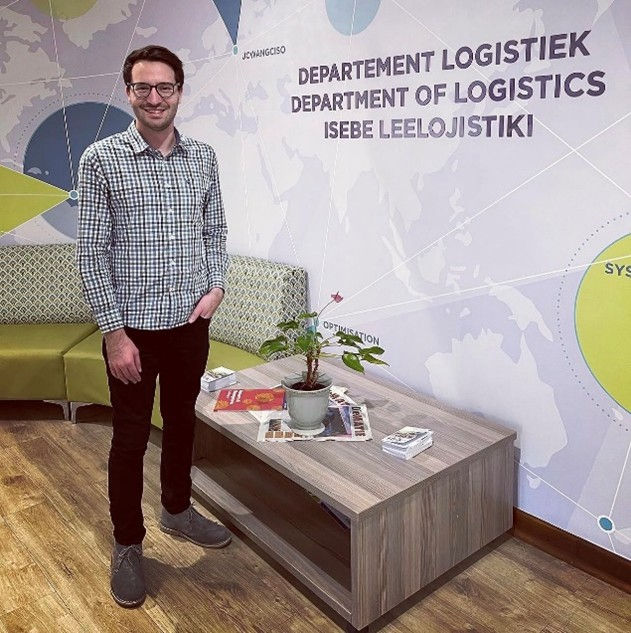
Since July 2022, I have returned to SU as a full-time lecturer in the Department of Logistics, teaching OR and Business Analytics (BA) at both undergraduate and postgraduate levels, and supervising Honours and Master’s students. Beyond the classroom, I have had the opportunity to lead student projects in the fourth-year module called Methods of OR, where students are exposed to solving real-world problems in industry. These projects included working with the Western Cape Department of Health on mobile clinic routing, with Capitec Bank on machine learning-based behaviour scoring and with Pargo on customer and pickup point segmentation. I have also been active in the research community, with several journal articles submitted and conference presentations delivered internationally, including at EURO 2024 in Copenhagen, Denmark and at ECCO 2025 in Marrakesh, Morocco."

How (and when) did you first get involved with ORSSA?
"I became a member of ORSSA in May 2013, during my second year of undergraduate studies at SU. My involvement grew naturally from there. I served as an Editorial Assistant for ORSSA’s academic journal, ORiON, from 2016 to 2017, assisting with typesetting and peer review. My connection to the society was further deepened through regular participation in the Annual Conference, where I have presented research on multiple occasions since 2015."
What position do you hold on Exec and for how long have you had this position?
"I currently serve as Head of External Liaison on the Executive Committee, a position I have held since January 2024. This is a role I value deeply, as growing and connecting our community is something I feel strongly about."
Tell us a bit more about what your role includes on the Exec.
"As Head of External Liaison, my role is primarily focused on two main areas: managing ORSSA’s Special Interest Groups (SIGs) and overseeing our relationships with sister societies.
ORSSA currently has seven SIGs spanning fields such as Data Science, Combinatorial Optimisation, Supply Chain Management, Quantitative Finance, Simulation Modelling, Artificial Intelligence and the History of OR in South Africa. Each SIG is led by a SIG Head whose responsibilities include organising events for ORSSA members, serving as a representative for ORSSA within their respective fields and regularly contributing blog posts to keep the community engaged. My role involves coordinating and supporting these SIG Heads to ensure the groups remain sustainably active. Learn more about the SIGs here.
The second pillar of my role involves managing ORSSA's relationships with sister societies, which include The Professional Body for Supply Chain Management (SAPICS), South African Statistical Association (SASA), South African Artificial Intelligence Association (SAAIA), Modelling and Simulation Hub Africa (MASHA) and South African System Dynamics Chapter (SASDC). Society representatives are responsible for keeping ORSSA's information current on partner websites, attending meetings and AGMs, participating in elections, and providing regular activity reports back to me. A key development in 2025 was aligning SIG Heads more closely with their corresponding sister societies, streamlining our external representation and reducing the administrative burden of maintaining separate representatives for each."
What do you feel is the biggest benefit of being a member of ORSSA?
"It is difficult to single out just one benefit, because ORSSA genuinely offers something meaningful at every stage of a person's career. That said, if I had to choose, I would say the biggest benefit is the community itself (the people you meet and the connections you build).
ORSSA provides a platform to engage with like-minded individuals who are passionate about advancing the field of OR, and that is something I have experienced firsthand since becoming a member in 2013. Whether it is through the Annual Conference, SIG events, symposiums, or informal networking opportunities, the society consistently brings together students, academics and industry professionals in a way that feels collaborative rather than transactional.
For me personally, that community aspect has been invaluable, from presenting my Honours research at my very first ORSSA conference in 2015, to now serving on the Executive Committee. The society has provided a thread of continuity throughout my career, connecting my time as a student, my years in industry at Takealot and my current role as a lecturer and researcher."
What excites you about the field of OR?
"What excites me most about OR is the sheer breadth of problems that can be tackled. OR is inherently multi-disciplinary, meaning that it draws on mathematics, statistics, computer science and domain knowledge from virtually any sector. Thus, there is always something new to learn and a new context in which to apply your skills. No two problems are ever quite the same.
Within OR, I am particularly passionate about linear programming and combinatorial optimisation, because of the variety of real-world problems that fall under these areas. Routing problems, for example, underpin some of the most logistically complex operations in the world, from courier networks and food delivery services to emergency vehicle dispatching and satellite scheduling. Scheduling and rostering problems arise everywhere, from hospital staff timetabling to machine sequencing in manufacturing plants. Assignment problems help organisations match resources to tasks in the most efficient way possible, while knapsack-type problems appear in various fields from cargo loading to financial portfolio selection.
What ties all of these together is the elegance of the mathematics beneath them and the tangible impact that a well-designed solution can have in practice. The fact that you can formulate a real-world problem as a mathematical model and then develop an algorithm that generates better outcomes for an organisation, or even for society, is something I find deeply rewarding."


What skills do you think OR students should focus on developing today?
"First and foremost, mathematical modelling remains the core of what we do. The ability to take a messy, real-world problem and translate it into a precise, structured mathematical formulation is what distinguishes an OR practitioner from a general data analyst. Students should invest time in truly understanding the principles behind the models they use, not just the software that solves them.
Closely related to this is the ability to work confidently with large datasets. Modern OR problems are data-rich, and proficiency in programming languages such as Python or R, alongside tools for data wrangling, visualisation and analysis, is essentially non-negotiable today. The better you are at extracting insights from data, the more effectively you can build and validate meaningful models.
Beyond the technical, I would strongly encourage students to develop their teamwork and collaboration skills. In practice, OR projects almost never happen in isolation. You will be working alongside engineers, business analysts, managers and clients, each bringing different perspectives and expertise. The ability to listen, adapt and contribute constructively within a team is something employers value enormously.
Finally, communication and presentation skills are often underestimated by technically-minded students. Being able to explain a complex model and its recommendations clearly and confidently to a non-technical audience, whether in a report, a dashboard or a boardroom presentation, is what ultimately determines whether your work makes an impact."
What has been your favourite ORSSA memory over the years?
"Without a doubt, my fondest ORSSA memories are the annual conferences I attended as a student, particularly those from 2015 to 2017. Those three years took us to three spectacular venues, namely Pecan Manor in Hartbeespoort, Lanzerac Wine Estate in Stellenbosch and Champagne Sports Resort in the Drakensberg, and each one left a lasting impression on me.
What made those conferences so special was not just the venues, but the full experience of being part of the ORSSA community for a few days. The welcoming functions always set a warm and collegial tone, the social events gave you a chance to connect with people you had only ever known through their published work and the gala dinners had an energy that was celebratory."


What piece of advice would you give to students or those new to OR?
"The most important piece of advice I can give is to embrace the discomfort of not knowing. OR is a field that constantly pushes you to the edge of your understanding. The problems are hard, the models are complex and there is almost always more to learn. Early in your career, that can feel overwhelming. But it is precisely that challenge that makes OR so rewarding.
Practically speaking, build your mathematical foundation as strongly as you can. Everything in OR (the algorithms, the software, the modelling, etc.) rests on that foundation. At the same time, do not neglect the applied side. Seek out opportunities to work on real problems, whether through industry projects, research collaborations or internships. There is a meaningful gap between solving textbook problems and navigating the messiness of a real-world dataset or a client who keeps changing the requirements. The sooner you experience that gap, the better equipped you will be to bridge it.
I would also strongly encourage you to get involved in communities like ORSSA early. Attend the conference (registrations are now open!), join a SIG and volunteer where you can. The networks you build as a student and in your early working career often stay with you for a lifetime."


Comments