Get to know the members of ORSSA: Bowen Heinrich

In this edition of Get to Know the Members of ORSSA, we feature Bowen Heinrich, who serves on the Executive Committee as Head of Marketing. Through promoting ORSSA's activities, events, and initiatives, Bowen helps showcase the value of Operations Research and strengthen the society's engagement with members and the broader community.
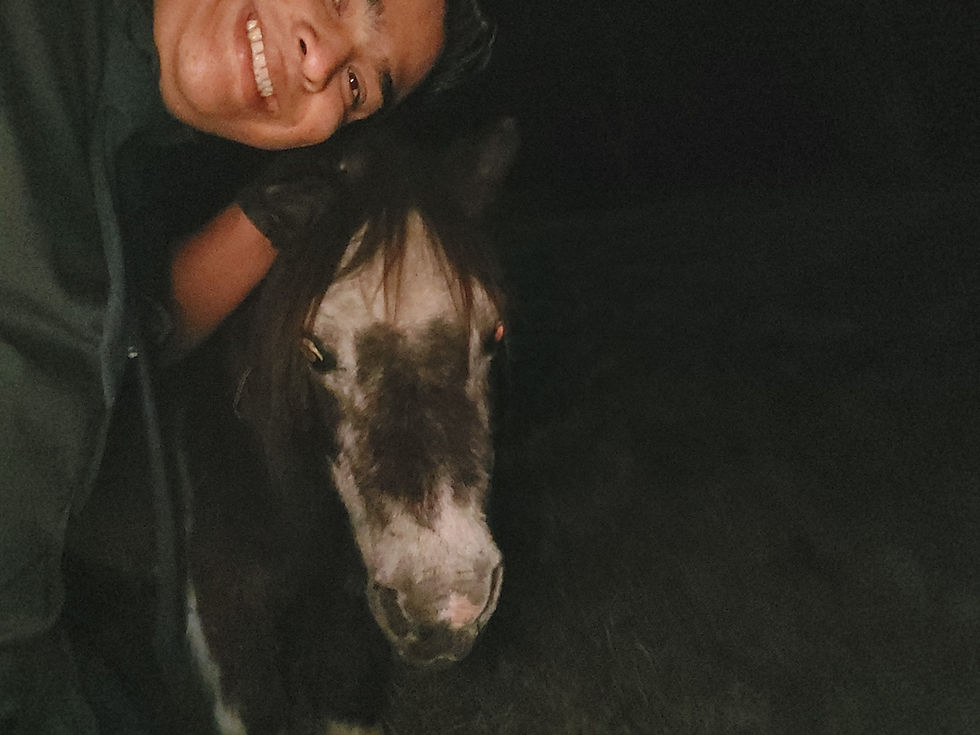
In this short interview, we learn more about Bowen, his interests, his experiences and also something about a donkey.

Bowen, what is your academic and professional background?
"My undergrad was a BSc in Mathematics (Stellenbosch University). Then I got my BComHons in Operations Research (Stellenbosch University) and MCom in Operations Research (Stellenbosch University). I’m currently lecturing operations research at Stellenbosch University."
How (and when) did you first get involved with ORSSA?
"The first time I heard of ORSSA was at the start of my Honours year in 2020. Lieschen Venter came to tell us about the Society and I thought it sounded cool. Later that year, ORSSA held a science communication competition that I entered. (I wonder why we haven’t done that since. Someone should organise that. 🤔)"
What position do you hold on Exec and for how long have you had this position?
"I’m currently the Head of Marketing, which I’ve done since 2023."
Tell us a bit more about what your role includes on the Exec.
"Mostly running ORSSA’s social media pages. Keeping the community up to date with events, talks and conferences, but also trying to spread the word of what operations research is to people who might not yet be aware."
Have you had any other positions on the Exec of ORSSA (and if so, when)?
"Not yet."
What do you feel is the biggest benefit of being a member of ORSSA?
"Almost certainly networking. Getting to know like-minded people in the field at networking events is a great opportunity."
What excites you about the field of OR?
"I’m convinced there’s no better feeling in existence than the “I’ve got it!” when you finally figure out a solution to a problem that’s been nagging at you for days. There’s such a wide range of problems in this field and coming up with new and creative ways to tackle them is so much fun."
Was there a specific project or moment that made you realise, "This is why I love OR"?
"I think I fell in love with operations research while doing a network optimisation course in my second year of undergrad. The algorithms we were doing felt like solving puzzles and playing games and I honestly just had so much fun."
What skills do you think OR students should focus on developing today?
"Technical skills like mathematics, statistics and programming will always be important, but I think one of the most valuable skills OR students can develop is critical thinking. With how complex and competent LLMs have become, it’s gotten fairly easy to outsource some parts of problem-solving to the machine. When finding an answer becomes easy, the importance then lies in determining whether or not that answer is sensible or realistic. OR practitioners need to be comfortable questioning assumptions, identifying biases, evaluating evidence and asking whether a result actually makes sense in the context of the problem at hand.
I’d also uncourage students to become confident with programming and data analysis. Modern OR often involves working with large and messy datasets and being able to move effectively between data, models and recommendations is important.
Ultimately, OR is about asking the right questions before we work on trying to find the answers. Computers are getting good at generating answers. The hard part is still figuring out whether we’re solving the right problem in the first place."
What is one common misconception people have about OR?
"A common misconception is that OR is just about mathematics. In fact, to this day, most of my friends think I lecture mathematics. It’s definitely an important part of the field, but OR is fundamentally about decision-making and problem-solving. Some of the most challenging and meaningful aspects of a project involve trying to transform problems from messy real-world complexity into pure unadulterated mathematics where solutions can be found."
What has been your favourite ORSSA memory over the years?
"I befriended a donkey at the Conference in 2023."


Comments